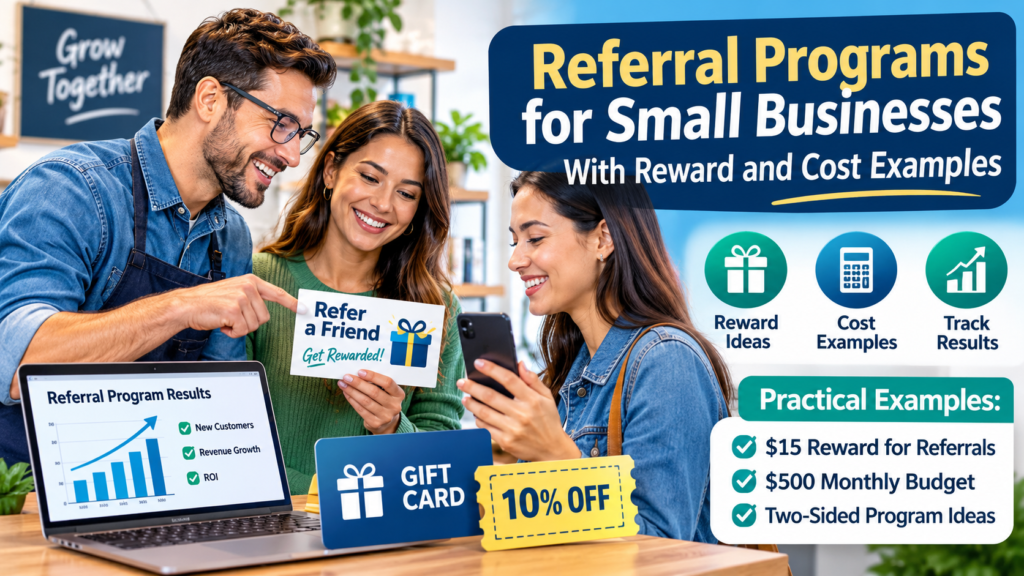

Finding new customers is one of the biggest challenges for small businesses. Advertising, social media marketing, and promotional campaigns can help attract attention, but these methods require time, money, and consistent effort.
One marketing strategy that can help businesses attract new customers is a referral program.
A referral program encourages existing customers to recommend a business to friends, family members, colleagues, or other potential buyers. In return, the business may offer a discount, gift card, account credit, free service, or another reward when a referral becomes a successful customer.
For example, a local salon could offer an existing customer a $10 discount for referring a friend who books and pays for a qualifying service. The new customer could also receive $10 off their first appointment.
This creates a benefit for both customers while giving the business an opportunity to generate additional sales.
In this guide, you’ll learn how to create referral programs for small businesses, choose appropriate rewards, calculate campaign costs, and measure whether your program is generating profitable customers.
What Is a Referral Program?
A referral program is a marketing system that rewards existing customers or business partners for introducing new customers to a business.
It uses recommendations and existing customer relationships to encourage new purchases.
A typical referral program involves three participants:
- The existing customer: Recommends the business to someone they know.
- The new customer: Uses the recommendation to discover or purchase from the business.
- The business: Provides the product or service and issues the agreed reward when the referral qualifies.
For example, imagine a small cleaning company that wants to attract more residential customers.
It introduces a referral offer:
- Existing customer receives $20 in service credit.
- New customer receives $20 off their first qualifying cleaning.
- Both rewards become available after the new customer completes and pays for the first service.
The business gains a new customer, the existing customer receives a benefit, and the new customer gets an incentive to try the service.
A referral program can be formal, with unique codes and tracking software, or simple, using customer names and a spreadsheet.
Why Should Small Businesses Use Referral Programs?
Referral marketing can be useful for businesses that depend on customer relationships, repeat purchases, and recommendations.
Here are several potential benefits.
1. Attract Customers Through Existing Relationships
People often ask friends, family members, and colleagues for recommendations before choosing a business.
A satisfied customer can introduce your products or services to people who may already trust their opinion.
A referral program gives customers an additional reason to share their positive experiences.
2. Encourage Customer Loyalty
Referral programs do more than attract new customers.
They can also encourage existing customers to remain engaged with your business.
For example, a coffee shop that offers a free drink after a successful referral gives customers another reason to return.
The reward should complement the customer experience rather than replace good service.
3. Create a Measurable Marketing Channel
A properly organized referral program allows you to track:
- Who referred a new customer
- How many referrals were received
- How many referrals became paying customers
- How much revenue referrals generated
- How much the business spent on rewards
- Whether referred customers return
These figures help you understand whether the program deserves additional investment.
4. Support Word-of-Mouth Marketing
Customers may recommend a business naturally when they have a good experience.
A referral program provides a structured way to encourage and recognize those recommendations.
It should not pressure customers to promote products they do not genuinely like. The strongest programs make it easy to share an honest recommendation.
5. Work Alongside Other Marketing Activities
Referral marketing does not need to replace advertising, email marketing, social media, or search engine optimization.
It can support these channels.
For example, a business can promote its referral offer in customer emails, on receipts, through its website, and at checkout.
This makes the program visible without requiring a separate advertising campaign.
7 Types of Referral Rewards Small Businesses Can Offer
Choosing the right reward is an important part of creating a successful referral program.
The best incentive depends on your business model, profit margins, average transaction value, and customer preferences.
Here are seven practical options.
1. Cash Rewards
A business can offer an existing customer a fixed cash reward when someone they refer becomes a paying customer.
Example:
- Existing customer receives $15.
- New customer completes a qualifying $100 purchase.
- The business pays the reward after the purchase is confirmed.
Cash is easy to understand and may appeal to customers who prefer flexible rewards.
However, the full cash amount is a direct program expense. Make sure your profit margins can support it.
2. Discounts on Future Purchases
Discounts encourage customers to return and purchase again.
For example:
A clothing store could offer an existing customer 15% off their next purchase after a successful referral.
The new customer could also receive 10% off their first order.
This approach may be particularly useful for retail stores, salons, restaurants, and other businesses with repeat customers.
3. Store Credit
Store credit gives customers a balance they can use toward future purchases.
Example:
A small online store offers $10 in store credit for every successful referral.
The customer can apply the credit to a future order.
Store credit can encourage repeat purchases, although the business must still account for the economic cost of the reward.
4. Free Products or Services
A business can reward customers with an item or service instead of cash.
Examples include:
- A free coffee
- A complimentary dessert
- A free product sample
- A complimentary haircut upgrade
- A free consultation
- An additional hour of a qualifying service
This can work well when the business’s cost of providing the reward is lower than its advertised value.
For example, a coffee shop might offer a free drink with a menu price of $5. The actual cost of ingredients and preparation may be much lower.
However, include staff time, packaging, and other variable expenses when calculating the true cost.
5. Gift Cards
Gift cards are easy to communicate and can be used as referral incentives.
A local restaurant could provide a $10 gift card after a successful referral.
A business could also partner with another local company to offer gift cards that introduce customers to both businesses.
Remember to consider the full face value when budgeting, along with any applicable accounting and gift-card rules.
6. Two-Sided Rewards
A two-sided referral program rewards both the existing customer and the new customer.
For example:
- Existing customer receives $15 in store credit.
- New customer receives $15 off the first qualifying purchase.
This gives the existing customer something valuable to share and gives the new customer a reason to try the business.
Two-sided rewards can be useful for businesses that want to encourage both sharing and first-time purchases.
7. Loyalty Points and Tiered Rewards
Businesses with loyalty programs can award points for successful referrals.
For example:
- One successful referral earns 100 points.
- Three successful referrals earn 350 points.
- Five successful referrals earn a special gift or additional benefit.
Tiered rewards can encourage ongoing participation.
However, keep the system easy to understand. Complicated reward rules may discourage customers from participating.
How to Choose the Right Referral Reward
A reward should be attractive enough to encourage participation but affordable enough to protect your profit margins.
Before selecting an incentive, consider these factors.
Your Average Transaction Value
How much does a typical customer spend?
A business with an average sale of $25 may struggle to support a $20 cash reward.
A business with an average transaction value of $500 may have more room for a larger incentive.
Your Profit Margin
Revenue is not the same as profit.
If a customer spends $100 but the business spends $65 delivering the product or service, only $35 remains before other overhead expenses.
A $30 referral reward would consume most of that contribution.
Calculate the cost of fulfilling an order before deciding how much to offer.
Customer Preferences
Consider what your customers actually value.
Some may prefer cash, while others may appreciate store credit, discounts, free services, or personalized gifts.
You can ask a few existing customers which reward would be most useful to them.
Repeat Purchase Potential
If customers regularly return, a future-purchase discount or store credit may encourage additional sales.
For businesses with one-time purchases, a cash reward or gift card may be more appropriate.
Reward Simplicity
Avoid making customers complete complicated steps to receive a small reward.
Explain the offer clearly, including when the reward becomes available and what purchases qualify.
How to Create a Referral Program for Your Small Business
A successful referral program needs clear rules, a convenient sharing process, and a reliable way to track results.
Follow these steps to build one.
Step 1: Define Your Goal
Start by deciding what you want the referral program to accomplish.
Possible goals include:
- Attracting new customers
- Increasing first-time purchases
- Generating more service bookings
- Increasing repeat purchases
- Expanding into nearby neighborhoods
- Encouraging existing customers to recommend your business
Choose one main objective.
For example, a local gym might focus on attracting 20 new paying members through existing-member referrals over three months.
A clear goal makes it easier to measure success.
Step 2: Identify Your Ideal Referrer
Not every customer will be equally interested in making referrals.
Consider customers who:
- Have purchased from you more than once
- Regularly use your services
- Have provided positive feedback
- Understand your products
- Have a genuine reason to recommend your business
You can invite these customers to participate without excluding other customers who may also want to refer someone.
Avoid asking customers to make recommendations based on experiences they have not actually had.
Step 3: Choose Your Reward Structure
Decide whether the business will offer:
- A reward only to the existing customer
- A discount only to the new customer
- Rewards to both participants
- Points for successful referrals
- Tiered rewards based on referral volume
For many small businesses, a two-sided reward is a simple starting point.
Example:
Give $10, Get $10
- Your friend receives $10 off their first qualifying purchase.
- You receive $10 in account credit after their purchase is completed.
This is easy to communicate and understand.
Step 4: Set Clear Eligibility Rules
Write down exactly what counts as a successful referral.
For example:
- The referred person must be a new customer.
- The referred customer must use a unique referral code or provide the referrer’s details.
- The first purchase must meet a minimum value.
- The purchase must be completed and paid for.
- Rewards are issued after the return or cancellation period, where appropriate.
- Self-referrals and duplicate accounts do not qualify.
- Rewards cannot be exchanged for cash unless the program specifically allows it.
Make the conditions visible before customers participate.
Step 5: Create a Simple Referral Message
Customers need an easy way to share your business.
Prepare a short message that can be sent through text, email, or social media.
For example:
“Enjoying your experience with BrightHome Cleaning? Refer a friend and you both receive $15 off a qualifying cleaning service. Share code FRIEND15 when booking. Your reward is issued after your friend’s first completed payment.”
The message should sound natural rather than overly promotional.
Step 6: Select a Tracking Method
You need a reliable way to connect referrals with the customers who made them.
Common tracking methods include:
Unique referral codes: Each existing customer receives a code they can share.
Referral links: Customers share a personalized website link that records the referral.
Customer names: New customers identify the person who recommended the business.
Referral cards: Physical cards contain a unique code or customer identifier.
Spreadsheet tracking: Staff record the referrer, new customer, purchase amount, and reward status.
Choose a method that fits your transaction volume and budget.
Step 7: Promote the Program
Customers cannot participate if they do not know the program exists.
Promote it through appropriate customer communication channels, including:
- Email newsletters
- Receipts and invoices
- Website banners
- Social media posts
- Customer loyalty messages
- In-store signs
- Appointment reminders
- Packaging inserts
Ask at appropriate moments, such as after a successful purchase or a positive service experience.
Avoid repeatedly sending referral requests to customers who have already declined.
Step 8: Deliver Rewards Promptly
Once a referral meets the program conditions, issue the reward within the timeframe you promised.
Keep a record of:
- Referrer name
- New customer name
- Referral date
- Purchase date
- Purchase value
- Reward amount
- Reward delivery date
Reliable reward delivery helps build trust in the program.
Step 9: Review and Improve the Program
After the first campaign period, review the results.
Ask:
- How many customers participated?
- How many referrals were submitted?
- How many became paying customers?
- Which reward was most popular?
- How much did each new customer cost to acquire?
- Did referred customers make repeat purchases?
Adjust the reward, promotional message, or eligibility rules when necessary.
Referral Program Example 1: Local Cleaning Company
Let’s consider a fictional cleaning business called BrightHome Cleaning Services.
The company wants to attract more residential customers through existing clients.
It introduces the following offer:
Refer a Friend and Both Save $15
- Existing customer receives $15 in service credit.
- New customer receives $15 off the first qualifying cleaning.
- Both rewards become available after the first service is completed and paid for.
Assume the company generates 20 successful referrals in one month.
| Item | Amount |
|---|---|
| Successful referrals | 20 |
| Existing customer reward | $15 |
| New customer reward | $15 |
| Total reward per referral | $30 |
| Total reward budget | $600 |
The company spends $600 on rewards if all 20 referrals qualify.
However, the actual economic cost of discounts may be lower than their face value if providing the discounted services has a relatively low variable cost.
The business should calculate the cost of labor, cleaning supplies, transportation, and other service-related expenses before deciding whether the program is profitable.
Referral Program Example 2: Local Coffee Shop
A coffee shop wants to encourage existing customers to introduce friends.
It creates a simple offer:
Bring a Friend, Get a Free Coffee
- Existing customer receives one free standard coffee.
- New customer receives 20% off their first qualifying order.
Assume 50 new customers participate during the campaign.
The estimated costs are:
| Expense | Calculation | Cost |
|---|---|---|
| Free coffees for referrers | 50 × $1.20 ingredient and preparation cost | $60 |
| New customer discounts | 50 × $2 average discount | $100 |
| Promotional materials | Estimated | $40 |
| Total campaign cost | $200 |
The coffee shop’s estimated campaign cost is $200.
If each referred customer makes an average purchase of $12 and the contribution margin after variable costs is 60%, the contribution from 50 new customers is:
50 × $12 × 60% = $360.
After the $200 campaign cost:
$360 − $200 = $160.
The campaign generates an estimated $160 contribution after referral-related costs, before other fixed overhead expenses.
This example assumes each customer makes one purchase and does not include additional future visits.
Referral Program Example 3: Small Online Store
An online store sells home accessories and wants to attract customers through existing buyers.
It introduces a two-sided referral program:
- Existing customer receives $10 in store credit.
- New customer receives $10 off an order of at least $50.
Assume the store receives 30 successful referrals.
| Item | Calculation | Amount |
|---|---|---|
| Successful referrals | 30 | 30 |
| Referrer store credit | 30 × $10 | $300 |
| New customer discounts | 30 × $10 | $300 |
| Total reward face value | $300 + $300 | $600 |
The program creates $600 in total reward value.
However, the store should distinguish the face value of its store credits from their actual economic cost.
For example, if the $10 store credit is redeemed on a future order, the business incurs the cost of fulfilling that order and gives up some revenue. The total economic impact depends on whether the customer would have purchased anyway, product margins, and credit redemption behavior.
The business should also monitor whether referred customers meet the minimum order requirement and whether their purchases generate sufficient contribution.
Referral Program Budget Example: A $500 Monthly Budget
A small business does not need a complicated reward system to start generating referrals.
Here is an illustrative monthly budget for a local service business.
| Budget item | Estimated cost |
|---|---|
| Existing customer rewards | $200 |
| New customer discounts | $150 |
| Referral cards and printed materials | $40 |
| Email and promotional materials | $30 |
| Tracking and administration | $30 |
| Contingency allowance | $50 |
| Total monthly budget | $500 |
This budget is an example, not a recommended amount for every business.
The actual reward budget should depend on the business’s average sale, contribution margin, expected referral volume, and customer lifetime value.
How Many Customers Are Needed to Cover the Budget?
Assume the business earns an average contribution of $75 from each new referred customer before referral program costs.
The break-even calculation is:
$500 ÷ $75 = 6.67
The business needs at least 7 new customers to cover the $500 monthly program budget based on this contribution assumption.
| New customers | Contribution per customer | Total contribution | Result after $500 budget |
|---|---|---|---|
| 3 | $75 | $225 | -$275 |
| 5 | $75 | $375 | -$125 |
| 7 | $75 | $525 | +$25 |
| 10 | $75 | $750 | +$250 |
| 15 | $75 | $1,125 | +$625 |
These figures are illustrative. They assume the $75 contribution already accounts for the variable cost of serving each new customer and that the $500 budget captures all referral-related program costs.
They do not include other fixed business overheads or taxes.
How to Calculate Referral Program ROI
A business should measure more than the number of customers who share referral links.
The important question is whether the program generates enough additional contribution to justify its costs.
A basic return-on-investment formula is:
Referral Program ROI = (Contribution Generated − Program Cost) ÷ Program Cost × 100
For example:
- Total referral program cost: $500
- Contribution generated by referred customers: $750
- Net contribution after program cost: $250
Calculation:
($750 − $500) ÷ $500 × 100 = 50%
The referral program produces an estimated 50% return based on the stated assumptions.
Important Metrics to Track
Referral rate: The percentage of existing customers who make at least one referral.
Referral conversion rate: The percentage of submitted referrals that become paying customers.
Cost per acquired customer: Total referral program cost divided by the number of new paying customers.
Average order value: The average amount spent by referred customers.
Customer lifetime value: The estimated value a customer generates over the entire relationship with the business.
Repeat purchase rate: The percentage of referred customers who purchase again.
Tracking these metrics helps identify whether the program attracts valuable customers or simply generates one-time purchases.
Best Referral Marketing Ideas for Different Small Businesses
Referral programs should match the products, services, and buying behavior of your customers.
Here are practical ideas for different industries.
Restaurants and Coffee Shops
Possible rewards include:
- Free coffee
- Free dessert
- Discounted meal combinations
- Loyalty points
- Gift cards
A simple “Bring a Friend” promotion can encourage customers to introduce someone to the restaurant.
Salons and Beauty Businesses
Possible rewards include:
- Discount on the next appointment
- Free service upgrade
- Product samples
- Loyalty points
- Discounts for both customers
A salon can make referrals part of its appointment confirmation and post-service communication.
Cleaning and Home Service Companies
Possible rewards include:
- Service credits
- Discounts on the next booking
- Free additional cleaning tasks
- Cash rewards
- Discounts for new customers
Make sure the reward is calculated against the contribution generated by the new service.
Online Stores
Possible rewards include:
- Store credit
- Discount codes
- Free shipping
- Free products
- Loyalty points
Unique referral links and promotional codes can help track purchases from online recommendations.
Gyms and Fitness Centers
Possible rewards include:
- Free membership days
- Account credit
- Personal training sessions
- Guest passes
- Membership discounts
A gym can invite existing members to introduce friends who may be interested in trying its facilities.
Professional Service Businesses
Consultants, accountants, agencies, and other professional service providers may prefer:
- Service credits
- Fixed referral fees where legally permitted
- Gift cards
- Donations to a selected charity
- Personal thank-you gifts
Professional service providers should check applicable industry rules, licensing requirements, and restrictions before offering referral compensation.
Common Referral Program Mistakes to Avoid
Even a well-intentioned referral program can become expensive or confusing if it is poorly designed.
Avoid these common mistakes.
1. Offering Rewards That Are Too Expensive
A large reward may attract referrals, but it can also reduce profitability.
Calculate your contribution margin and customer value before choosing an incentive.
2. Making the Rules Complicated
Customers should not have to read several pages to understand how to earn a small reward.
Keep the eligibility requirements and reward conditions simple.
3. Failing to Track Referrals
If you cannot identify who made a referral, you may issue rewards incorrectly or miss successful referrals.
Use unique codes, links, customer records, or a spreadsheet.
4. Rewarding Unqualified Referrals
A person who submits a name or email address should not automatically receive a reward if the referral never becomes a customer.
Set a clear qualifying event, such as a completed and paid first purchase.
5. Ignoring Profit Margins
A referral campaign may generate sales while still losing money.
Measure contribution after product costs, service delivery costs, discounts, and rewards.
6. Forgetting to Promote the Program
Even a valuable offer will not generate many referrals if customers do not know it exists.
Promote it through appropriate customer communication channels.
7. Delaying Rewards
Customers may lose confidence if they complete the referral process but do not receive the promised incentive.
Set a realistic reward delivery timeframe and follow it.
8. Using Referral Rewards to Buy Positive Reviews
A referral program should reward a qualifying customer introduction or purchase, not require someone to publish a positive review.
Do not condition a reward on a five-star rating or favorable review. If you offer incentives for reviews, separate the process from referral rewards, check the applicable platform rules, and follow disclosure requirements.
Referral Program Rules and Legal Considerations
Before launching a program, write clear terms and check the laws and industry requirements that apply to your business.
Consider the following points:
- Explain who can participate.
- Define what counts as a successful referral.
- State when rewards are issued.
- Identify minimum purchase requirements.
- Explain expiration dates and restrictions.
- Prevent duplicate, fraudulent, or self-referrals.
- Protect customer contact information.
- Follow applicable privacy and marketing communication rules.
- Review tax and reporting obligations for cash or other rewards.
- Check professional or industry-specific restrictions on referral fees.
If you operate in the United States, advertising claims and customer endorsements should be truthful and not misleading.
A referral reward should not be confused with an incentive for a positive online review. The Federal Trade Commission explains that incentives for reviews must not be conditioned on positive sentiment, and material connections should be disclosed when required. Some review platforms also prohibit incentivized reviews.
For this reason, keep customer referral rewards separate from review requests and never require customers to post favorable feedback to receive a referral benefit.
A Simple Referral Program Launch Checklist
Use this checklist when preparing your first campaign.
- Define the main objective of the program.
- Identify the customers most likely to recommend your business.
- Choose a reward that fits your profit margin.
- Decide whether to reward one or both customers.
- Set minimum purchase and eligibility requirements.
- Write clear program terms.
- Create a referral code, link, or tracking method.
- Prepare a simple promotional message.
- Add the offer to your website or customer communications.
- Train employees to explain the program.
- Set up a system for recording and issuing rewards.
- Review results at the end of the campaign period.
Frequently Asked Questions About Referral Programs for Small Businesses
1. What is a referral program for a small business?
A referral program encourages existing customers or business partners to introduce new customers to a business. The business provides a reward when a referral meets the program’s conditions, such as completing a qualifying purchase.
2. What is a good referral reward for a small business?
A good reward is valuable to customers but affordable for the business. Options include discounts, store credit, cash, gift cards, free products, or complimentary services. The right amount depends on the average transaction value and profit margin.
3. Should I reward both the existing customer and the new customer?
You can reward both. A two-sided program gives the existing customer an incentive to share and provides the new customer with a reason to try the business. However, calculate the combined reward cost before launching the offer.
4. How much should a small business spend on a referral program?
There is no universal budget. Start with an amount your business can afford and calculate the maximum reward based on expected contribution from new customers. A small pilot campaign can help you estimate demand before committing more money.
5. How do I track customer referrals?
You can use unique referral codes, personalized links, customer names, referral cards, or a spreadsheet. For larger programs, referral software can automate tracking and reward distribution.
6. How do I calculate the cost of a referral program?
Add the costs of customer rewards, new-customer discounts, promotional materials, software, administration, and other campaign expenses. Divide the total by the number of new paying customers to calculate the cost per acquired customer.
7. Are referral programs suitable for service businesses?
Yes. Cleaning companies, salons, gyms, repair services, consultants, and other service providers can use referral programs. Rewards can include service credits, discounts, complimentary upgrades, or other appropriate incentives.
8. Can a small business run a referral program without software?
Yes. A small business can start with a spreadsheet, customer records, and unique referral codes. Software becomes more useful when referral volume increases and manual tracking becomes difficult.
9. How long should a referral program run?
A business can run a referral program continuously or for a limited campaign period. A 30- to 90-day pilot is one practical way to evaluate participation, conversion, reward costs, and profitability before expanding the program.
10. Are referral rewards taxable?
Tax treatment depends on the type of reward, the recipient, the business arrangement, and applicable tax rules. Businesses should keep accurate records and consult a qualified tax professional about any reporting or withholding obligations.
Conclusion
Referral programs for small businesses can provide a practical way to attract new customers through existing relationships. By rewarding customers for successful recommendations, businesses can create an additional source of leads and sales while encouraging customer loyalty.
The key is to choose rewards that match your business model and profit margins. Cash, discounts, store credit, free products, and two-sided incentives can all work when the terms are clear and the costs are properly calculated.
Start with a simple program, define what counts as a successful referral, and use referral codes or tracking records to measure results.
Most importantly, focus on profitable new customers rather than the total number of referrals. A well-managed referral program should create value for the existing customer, the new customer, and the business.
Referral Programs for Small Businesses: Reward and Cost Examples
Finding new customers is one of the biggest challenges for small businesses. Advertising, social media marketing, and promotional campaigns can help attract attention, but these methods require time, money, and consistent effort.
One marketing strategy that can help businesses attract new customers is a referral program.
A referral program encourages existing customers to recommend a business to friends, family members, colleagues, or other potential buyers. In return, the business may offer a discount, gift card, account credit, free service, or another reward when a referral becomes a successful customer.
For example, a local salon could offer an existing customer a $10 discount for referring a friend who books and pays for a qualifying service. The new customer could also receive $10 off their first appointment.
This creates a benefit for both customers while giving the business an opportunity to generate additional sales.
In this guide, you’ll learn how to create referral programs for small businesses, choose appropriate rewards, calculate campaign costs, and measure whether your program is generating profitable customers.
What Is a Referral Program?
A referral program is a marketing system that rewards existing customers or business partners for introducing new customers to a business.
It uses recommendations and existing customer relationships to encourage new purchases.
A typical referral program involves three participants:
- The existing customer: Recommends the business to someone they know.
- The new customer: Uses the recommendation to discover or purchase from the business.
- The business: Provides the product or service and issues the agreed reward when the referral qualifies.
For example, imagine a small cleaning company that wants to attract more residential customers.
It introduces a referral offer:
- Existing customer receives $20 in service credit.
- New customer receives $20 off their first qualifying cleaning.
- Both rewards become available after the new customer completes and pays for the first service.
The business gains a new customer, the existing customer receives a benefit, and the new customer gets an incentive to try the service.
A referral program can be formal, with unique codes and tracking software, or simple, using customer names and a spreadsheet.
Why Should Small Businesses Use Referral Programs?
Referral marketing can be useful for businesses that depend on customer relationships, repeat purchases, and recommendations.
Here are several potential benefits.
1. Attract Customers Through Existing Relationships
People often ask friends, family members, and colleagues for recommendations before choosing a business.
A satisfied customer can introduce your products or services to people who may already trust their opinion.
A referral program gives customers an additional reason to share their positive experiences.
2. Encourage Customer Loyalty
Referral programs do more than attract new customers.
They can also encourage existing customers to remain engaged with your business.
For example, a coffee shop that offers a free drink after a successful referral gives customers another reason to return.
The reward should complement the customer experience rather than replace good service.
3. Create a Measurable Marketing Channel
A properly organized referral program allows you to track:
- Who referred a new customer
- How many referrals were received
- How many referrals became paying customers
- How much revenue referrals generated
- How much the business spent on rewards
- Whether referred customers return
These figures help you understand whether the program deserves additional investment.
4. Support Word-of-Mouth Marketing
Customers may recommend a business naturally when they have a good experience.
A referral program provides a structured way to encourage and recognize those recommendations.
It should not pressure customers to promote products they do not genuinely like. The strongest programs make it easy to share an honest recommendation.
5. Work Alongside Other Marketing Activities
Referral marketing does not need to replace advertising, email marketing, social media, or search engine optimization.
It can support these channels.
For example, a business can promote its referral offer in customer emails, on receipts, through its website, and at checkout.
This makes the program visible without requiring a separate advertising campaign.
7 Types of Referral Rewards Small Businesses Can Offer
Choosing the right reward is an important part of creating a successful referral program.
The best incentive depends on your business model, profit margins, average transaction value, and customer preferences.
Here are seven practical options.
1. Cash Rewards
A business can offer an existing customer a fixed cash reward when someone they refer becomes a paying customer.
Example:
- Existing customer receives $15.
- New customer completes a qualifying $100 purchase.
- The business pays the reward after the purchase is confirmed.
Cash is easy to understand and may appeal to customers who prefer flexible rewards.
However, the full cash amount is a direct program expense. Make sure your profit margins can support it.
2. Discounts on Future Purchases
Discounts encourage customers to return and purchase again.
For example:
A clothing store could offer an existing customer 15% off their next purchase after a successful referral.
The new customer could also receive 10% off their first order.
This approach may be particularly useful for retail stores, salons, restaurants, and other businesses with repeat customers.
3. Store Credit
Store credit gives customers a balance they can use toward future purchases.
Example:
A small online store offers $10 in store credit for every successful referral.
The customer can apply the credit to a future order.
Store credit can encourage repeat purchases, although the business must still account for the economic cost of the reward.
4. Free Products or Services
A business can reward customers with an item or service instead of cash.
Examples include:
- A free coffee
- A complimentary dessert
- A free product sample
- A complimentary haircut upgrade
- A free consultation
- An additional hour of a qualifying service
This can work well when the business’s cost of providing the reward is lower than its advertised value.
For example, a coffee shop might offer a free drink with a menu price of $5. The actual cost of ingredients and preparation may be much lower.
However, include staff time, packaging, and other variable expenses when calculating the true cost.
5. Gift Cards
Gift cards are easy to communicate and can be used as referral incentives.
A local restaurant could provide a $10 gift card after a successful referral.
A business could also partner with another local company to offer gift cards that introduce customers to both businesses.
Remember to consider the full face value when budgeting, along with any applicable accounting and gift-card rules.
6. Two-Sided Rewards
A two-sided referral program rewards both the existing customer and the new customer.
For example:
- Existing customer receives $15 in store credit.
- New customer receives $15 off the first qualifying purchase.
This gives the existing customer something valuable to share and gives the new customer a reason to try the business.
Two-sided rewards can be useful for businesses that want to encourage both sharing and first-time purchases.
7. Loyalty Points and Tiered Rewards
Businesses with loyalty programs can award points for successful referrals.
For example:
- One successful referral earns 100 points.
- Three successful referrals earn 350 points.
- Five successful referrals earn a special gift or additional benefit.
Tiered rewards can encourage ongoing participation.
However, keep the system easy to understand. Complicated reward rules may discourage customers from participating.
How to Choose the Right Referral Reward
A reward should be attractive enough to encourage participation but affordable enough to protect your profit margins.
Before selecting an incentive, consider these factors.
Your Average Transaction Value
How much does a typical customer spend?
A business with an average sale of $25 may struggle to support a $20 cash reward.
A business with an average transaction value of $500 may have more room for a larger incentive.
Your Profit Margin
Revenue is not the same as profit.
If a customer spends $100 but the business spends $65 delivering the product or service, only $35 remains before other overhead expenses.
A $30 referral reward would consume most of that contribution.
Calculate the cost of fulfilling an order before deciding how much to offer.
Customer Preferences
Consider what your customers actually value.
Some may prefer cash, while others may appreciate store credit, discounts, free services, or personalized gifts.
You can ask a few existing customers which reward would be most useful to them.
Repeat Purchase Potential
If customers regularly return, a future-purchase discount or store credit may encourage additional sales.
For businesses with one-time purchases, a cash reward or gift card may be more appropriate.
Reward Simplicity
Avoid making customers complete complicated steps to receive a small reward.
Explain the offer clearly, including when the reward becomes available and what purchases qualify.
How to Create a Referral Program for Your Small Business
A successful referral program needs clear rules, a convenient sharing process, and a reliable way to track results.
Follow these steps to build one.
Step 1: Define Your Goal
Start by deciding what you want the referral program to accomplish.
Possible goals include:
- Attracting new customers
- Increasing first-time purchases
- Generating more service bookings
- Increasing repeat purchases
- Expanding into nearby neighborhoods
- Encouraging existing customers to recommend your business
Choose one main objective.
For example, a local gym might focus on attracting 20 new paying members through existing-member referrals over three months.
A clear goal makes it easier to measure success.
Step 2: Identify Your Ideal Referrer
Not every customer will be equally interested in making referrals.
Consider customers who:
- Have purchased from you more than once
- Regularly use your services
- Have provided positive feedback
- Understand your products
- Have a genuine reason to recommend your business
You can invite these customers to participate without excluding other customers who may also want to refer someone.
Avoid asking customers to make recommendations based on experiences they have not actually had.
Step 3: Choose Your Reward Structure
Decide whether the business will offer:
- A reward only to the existing customer
- A discount only to the new customer
- Rewards to both participants
- Points for successful referrals
- Tiered rewards based on referral volume
For many small businesses, a two-sided reward is a simple starting point.
Example:
Give $10, Get $10
- Your friend receives $10 off their first qualifying purchase.
- You receive $10 in account credit after their purchase is completed.
This is easy to communicate and understand.
Step 4: Set Clear Eligibility Rules
Write down exactly what counts as a successful referral.
For example:
- The referred person must be a new customer.
- The referred customer must use a unique referral code or provide the referrer’s details.
- The first purchase must meet a minimum value.
- The purchase must be completed and paid for.
- Rewards are issued after the return or cancellation period, where appropriate.
- Self-referrals and duplicate accounts do not qualify.
- Rewards cannot be exchanged for cash unless the program specifically allows it.
Make the conditions visible before customers participate.
Step 5: Create a Simple Referral Message
Customers need an easy way to share your business.
Prepare a short message that can be sent through text, email, or social media.
For example:
“Enjoying your experience with BrightHome Cleaning? Refer a friend and you both receive $15 off a qualifying cleaning service. Share code FRIEND15 when booking. Your reward is issued after your friend’s first completed payment.”
The message should sound natural rather than overly promotional.
Step 6: Select a Tracking Method
You need a reliable way to connect referrals with the customers who made them.
Common tracking methods include:
Unique referral codes: Each existing customer receives a code they can share.
Referral links: Customers share a personalized website link that records the referral.
Customer names: New customers identify the person who recommended the business.
Referral cards: Physical cards contain a unique code or customer identifier.
Spreadsheet tracking: Staff record the referrer, new customer, purchase amount, and reward status.
Choose a method that fits your transaction volume and budget.
Step 7: Promote the Program
Customers cannot participate if they do not know the program exists.
Promote it through appropriate customer communication channels, including:
- Email newsletters
- Receipts and invoices
- Website banners
- Social media posts
- Customer loyalty messages
- In-store signs
- Appointment reminders
- Packaging inserts
Ask at appropriate moments, such as after a successful purchase or a positive service experience.
Avoid repeatedly sending referral requests to customers who have already declined.
Step 8: Deliver Rewards Promptly
Once a referral meets the program conditions, issue the reward within the timeframe you promised.
Keep a record of:
- Referrer name
- New customer name
- Referral date
- Purchase date
- Purchase value
- Reward amount
- Reward delivery date
Reliable reward delivery helps build trust in the program.
Step 9: Review and Improve the Program
After the first campaign period, review the results.
Ask:
- How many customers participated?
- How many referrals were submitted?
- How many became paying customers?
- Which reward was most popular?
- How much did each new customer cost to acquire?
- Did referred customers make repeat purchases?
Adjust the reward, promotional message, or eligibility rules when necessary.
Referral Program Example 1: Local Cleaning Company
Let’s consider a fictional cleaning business called BrightHome Cleaning Services.
The company wants to attract more residential customers through existing clients.
It introduces the following offer:
Refer a Friend and Both Save $15
- Existing customer receives $15 in service credit.
- New customer receives $15 off the first qualifying cleaning.
- Both rewards become available after the first service is completed and paid for.
Assume the company generates 20 successful referrals in one month.
| Item | Amount |
|---|---|
| Successful referrals | 20 |
| Existing customer reward | $15 |
| New customer reward | $15 |
| Total reward per referral | $30 |
| Total reward budget | $600 |
The company spends $600 on rewards if all 20 referrals qualify.
However, the actual economic cost of discounts may be lower than their face value if providing the discounted services has a relatively low variable cost.
The business should calculate the cost of labor, cleaning supplies, transportation, and other service-related expenses before deciding whether the program is profitable.
Referral Program Example 2: Local Coffee Shop
A coffee shop wants to encourage existing customers to introduce friends.
It creates a simple offer:
Bring a Friend, Get a Free Coffee
- Existing customer receives one free standard coffee.
- New customer receives 20% off their first qualifying order.
Assume 50 new customers participate during the campaign.
The estimated costs are:
| Expense | Calculation | Cost |
|---|---|---|
| Free coffees for referrers | 50 × $1.20 ingredient and preparation cost | $60 |
| New customer discounts | 50 × $2 average discount | $100 |
| Promotional materials | Estimated | $40 |
| Total campaign cost | $200 |
The coffee shop’s estimated campaign cost is $200.
If each referred customer makes an average purchase of $12 and the contribution margin after variable costs is 60%, the contribution from 50 new customers is:
50 × $12 × 60% = $360.
After the $200 campaign cost:
$360 − $200 = $160.
The campaign generates an estimated $160 contribution after referral-related costs, before other fixed overhead expenses.
This example assumes each customer makes one purchase and does not include additional future visits.
Referral Program Example 3: Small Online Store
An online store sells home accessories and wants to attract customers through existing buyers.
It introduces a two-sided referral program:
- Existing customer receives $10 in store credit.
- New customer receives $10 off an order of at least $50.
Assume the store receives 30 successful referrals.
| Item | Calculation | Amount |
|---|---|---|
| Successful referrals | 30 | 30 |
| Referrer store credit | 30 × $10 | $300 |
| New customer discounts | 30 × $10 | $300 |
| Total reward face value | $300 + $300 | $600 |
The program creates $600 in total reward value.
However, the store should distinguish the face value of its store credits from their actual economic cost.
For example, if the $10 store credit is redeemed on a future order, the business incurs the cost of fulfilling that order and gives up some revenue. The total economic impact depends on whether the customer would have purchased anyway, product margins, and credit redemption behavior.
The business should also monitor whether referred customers meet the minimum order requirement and whether their purchases generate sufficient contribution.
Referral Program Budget Example: A $500 Monthly Budget
A small business does not need a complicated reward system to start generating referrals.
Here is an illustrative monthly budget for a local service business.
| Budget item | Estimated cost |
|---|---|
| Existing customer rewards | $200 |
| New customer discounts | $150 |
| Referral cards and printed materials | $40 |
| Email and promotional materials | $30 |
| Tracking and administration | $30 |
| Contingency allowance | $50 |
| Total monthly budget | $500 |
This budget is an example, not a recommended amount for every business.
The actual reward budget should depend on the business’s average sale, contribution margin, expected referral volume, and customer lifetime value.
How Many Customers Are Needed to Cover the Budget?
Assume the business earns an average contribution of $75 from each new referred customer before referral program costs.
The break-even calculation is:
$500 ÷ $75 = 6.67
The business needs at least 7 new customers to cover the $500 monthly program budget based on this contribution assumption.
| New customers | Contribution per customer | Total contribution | Result after $500 budget |
|---|---|---|---|
| 3 | $75 | $225 | -$275 |
| 5 | $75 | $375 | -$125 |
| 7 | $75 | $525 | +$25 |
| 10 | $75 | $750 | +$250 |
| 15 | $75 | $1,125 | +$625 |
These figures are illustrative. They assume the $75 contribution already accounts for the variable cost of serving each new customer and that the $500 budget captures all referral-related program costs.
They do not include other fixed business overheads or taxes.
How to Calculate Referral Program ROI
A business should measure more than the number of customers who share referral links.
The important question is whether the program generates enough additional contribution to justify its costs.
A basic return-on-investment formula is:
Referral Program ROI = (Contribution Generated − Program Cost) ÷ Program Cost × 100
For example:
- Total referral program cost: $500
- Contribution generated by referred customers: $750
- Net contribution after program cost: $250
Calculation:
($750 − $500) ÷ $500 × 100 = 50%
The referral program produces an estimated 50% return based on the stated assumptions.
Important Metrics to Track
Referral rate: The percentage of existing customers who make at least one referral.
Referral conversion rate: The percentage of submitted referrals that become paying customers.
Cost per acquired customer: Total referral program cost divided by the number of new paying customers.
Average order value: The average amount spent by referred customers.
Customer lifetime value: The estimated value a customer generates over the entire relationship with the business.
Repeat purchase rate: The percentage of referred customers who purchase again.
Tracking these metrics helps identify whether the program attracts valuable customers or simply generates one-time purchases.
Best Referral Marketing Ideas for Different Small Businesses
Referral programs should match the products, services, and buying behavior of your customers.
Here are practical ideas for different industries.
Restaurants and Coffee Shops
Possible rewards include:
- Free coffee
- Free dessert
- Discounted meal combinations
- Loyalty points
- Gift cards
A simple “Bring a Friend” promotion can encourage customers to introduce someone to the restaurant.
Salons and Beauty Businesses
Possible rewards include:
- Discount on the next appointment
- Free service upgrade
- Product samples
- Loyalty points
- Discounts for both customers
A salon can make referrals part of its appointment confirmation and post-service communication.
Cleaning and Home Service Companies
Possible rewards include:
- Service credits
- Discounts on the next booking
- Free additional cleaning tasks
- Cash rewards
- Discounts for new customers
Make sure the reward is calculated against the contribution generated by the new service.
Online Stores
Possible rewards include:
- Store credit
- Discount codes
- Free shipping
- Free products
- Loyalty points
Unique referral links and promotional codes can help track purchases from online recommendations.
Gyms and Fitness Centers
Possible rewards include:
- Free membership days
- Account credit
- Personal training sessions
- Guest passes
- Membership discounts
A gym can invite existing members to introduce friends who may be interested in trying its facilities.
Professional Service Businesses
Consultants, accountants, agencies, and other professional service providers may prefer:
- Service credits
- Fixed referral fees where legally permitted
- Gift cards
- Donations to a selected charity
- Personal thank-you gifts
Professional service providers should check applicable industry rules, licensing requirements, and restrictions before offering referral compensation.
Common Referral Program Mistakes to Avoid
Even a well-intentioned referral program can become expensive or confusing if it is poorly designed.
Avoid these common mistakes.
1. Offering Rewards That Are Too Expensive
A large reward may attract referrals, but it can also reduce profitability.
Calculate your contribution margin and customer value before choosing an incentive.
2. Making the Rules Complicated
Customers should not have to read several pages to understand how to earn a small reward.
Keep the eligibility requirements and reward conditions simple.
3. Failing to Track Referrals
If you cannot identify who made a referral, you may issue rewards incorrectly or miss successful referrals.
Use unique codes, links, customer records, or a spreadsheet.
4. Rewarding Unqualified Referrals
A person who submits a name or email address should not automatically receive a reward if the referral never becomes a customer.
Set a clear qualifying event, such as a completed and paid first purchase.
5. Ignoring Profit Margins
A referral campaign may generate sales while still losing money.
Measure contribution after product costs, service delivery costs, discounts, and rewards.
6. Forgetting to Promote the Program
Even a valuable offer will not generate many referrals if customers do not know it exists.
Promote it through appropriate customer communication channels.
7. Delaying Rewards
Customers may lose confidence if they complete the referral process but do not receive the promised incentive.
Set a realistic reward delivery timeframe and follow it.
8. Using Referral Rewards to Buy Positive Reviews
A referral program should reward a qualifying customer introduction or purchase, not require someone to publish a positive review.
Do not condition a reward on a five-star rating or favorable review. If you offer incentives for reviews, separate the process from referral rewards, check the applicable platform rules, and follow disclosure requirements.
Referral Program Rules and Legal Considerations
Before launching a program, write clear terms and check the laws and industry requirements that apply to your business.
Consider the following points:
- Explain who can participate.
- Define what counts as a successful referral.
- State when rewards are issued.
- Identify minimum purchase requirements.
- Explain expiration dates and restrictions.
- Prevent duplicate, fraudulent, or self-referrals.
- Protect customer contact information.
- Follow applicable privacy and marketing communication rules.
- Review tax and reporting obligations for cash or other rewards.
- Check professional or industry-specific restrictions on referral fees.
If you operate in the United States, advertising claims and customer endorsements should be truthful and not misleading.
A referral reward should not be confused with an incentive for a positive online review. The Federal Trade Commission explains that incentives for reviews must not be conditioned on positive sentiment, and material connections should be disclosed when required. Some review platforms also prohibit incentivized reviews.
For this reason, keep customer referral rewards separate from review requests and never require customers to post favorable feedback to receive a referral benefit.
A Simple Referral Program Launch Checklist
Use this checklist when preparing your first campaign.
- Define the main objective of the program.
- Identify the customers most likely to recommend your business.
- Choose a reward that fits your profit margin.
- Decide whether to reward one or both customers.
- Set minimum purchase and eligibility requirements.
- Write clear program terms.
- Create a referral code, link, or tracking method.
- Prepare a simple promotional message.
- Add the offer to your website or customer communications.
- Train employees to explain the program.
- Set up a system for recording and issuing rewards.
- Review results at the end of the campaign period.
Frequently Asked Questions About Referral Programs for Small Businesses
1. What is a referral program for a small business?
A referral program encourages existing customers or business partners to introduce new customers to a business. The business provides a reward when a referral meets the program’s conditions, such as completing a qualifying purchase.
2. What is a good referral reward for a small business?
A good reward is valuable to customers but affordable for the business. Options include discounts, store credit, cash, gift cards, free products, or complimentary services. The right amount depends on the average transaction value and profit margin.
3. Should I reward both the existing customer and the new customer?
You can reward both. A two-sided program gives the existing customer an incentive to share and provides the new customer with a reason to try the business. However, calculate the combined reward cost before launching the offer.
4. How much should a small business spend on a referral program?
There is no universal budget. Start with an amount your business can afford and calculate the maximum reward based on expected contribution from new customers. A small pilot campaign can help you estimate demand before committing more money.
5. How do I track customer referrals?
You can use unique referral codes, personalized links, customer names, referral cards, or a spreadsheet. For larger programs, referral software can automate tracking and reward distribution.
6. How do I calculate the cost of a referral program?
Add the costs of customer rewards, new-customer discounts, promotional materials, software, administration, and other campaign expenses. Divide the total by the number of new paying customers to calculate the cost per acquired customer.
7. Are referral programs suitable for service businesses?
Yes. Cleaning companies, salons, gyms, repair services, consultants, and other service providers can use referral programs. Rewards can include service credits, discounts, complimentary upgrades, or other appropriate incentives.
8. Can a small business run a referral program without software?
Yes. A small business can start with a spreadsheet, customer records, and unique referral codes. Software becomes more useful when referral volume increases and manual tracking becomes difficult.
9. How long should a referral program run?
A business can run a referral program continuously or for a limited campaign period. A 30- to 90-day pilot is one practical way to evaluate participation, conversion, reward costs, and profitability before expanding the program.
10. Are referral rewards taxable?
Tax treatment depends on the type of reward, the recipient, the business arrangement, and applicable tax rules. Businesses should keep accurate records and consult a qualified tax professional about any reporting or withholding obligations.
Conclusion
Referral programs for small businesses can provide a practical way to attract new customers through existing relationships. By rewarding customers for successful recommendations, businesses can create an additional source of leads and sales while encouraging customer loyalty.
The key is to choose rewards that match your business model and profit margins. Cash, discounts, store credit, free products, and two-sided incentives can all work when the terms are clear and the costs are properly calculated.
Start with a simple program, define what counts as a successful referral, and use referral codes or tracking records to measure results.
Most importantly, focus on profitable new customers rather than the total number of referrals. A well-managed referral program should create value for the existing customer, the new customer, and the business.
Final recommendation: Begin with a small 30- to 90-day referral campaign, track every successful purchase, and review the cost per acquired customer before increasing the reward budget.