
A referral email, a case study, and a webinar can all bring in inquiries. They take different amounts of time, and they attract people at different stages of buying. Before trying all three, decide whom you want to reach and what would make an inquiry worth following up.
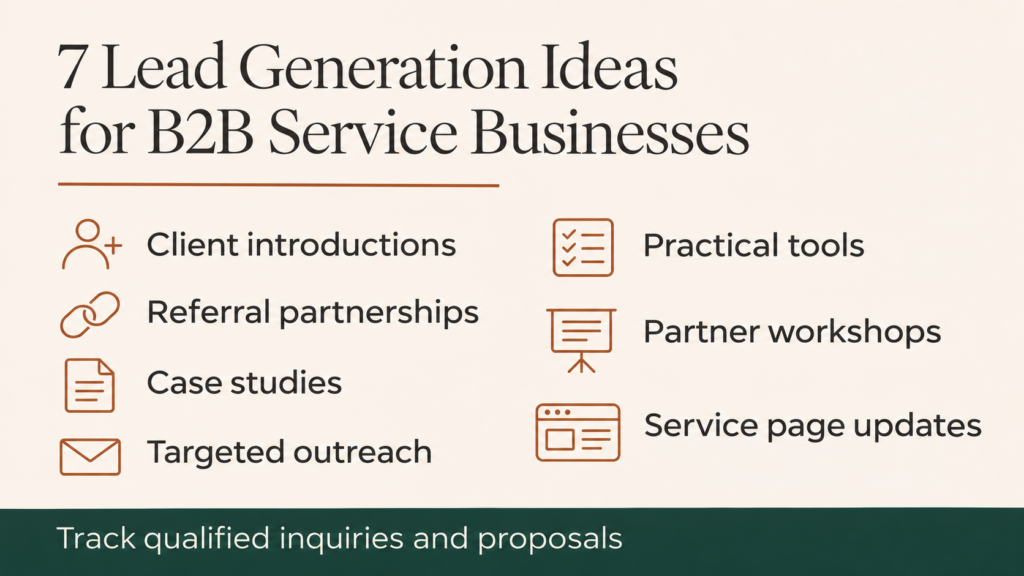
These 7 lead generation ideas for B2B service businesses work for teams such as agencies, bookkeepers, consultants, and IT providers. Start with one offer and one or two channels you can maintain. The examples show what to do first and how to track the response.
Define a qualified lead before you start
Pick a buyer, a service, and a reason they may need it now. A bookkeeping firm might focus on small agencies that need to bring several months of overdue records up to date. A qualified inquiry could be from an agency that uses software the firm supports, needs the service within 60 days, and agrees to a scope call.
Use criteria that fit your buying process, such as location, service need, timing, or access to the person who can approve the work. An email address or a download is a useful signal of interest. A qualified lead meets the criteria you’ve set for following up.
1. Ask satisfied clients for a specific introduction
Choose a recent point when the client has seen the work, such as after you deliver a project or finish onboarding. Describe the type of business you help and the situation that makes the introduction timely. Give the client a short message they can forward if they want to.
Example. A payroll setup consultant finishes helping a retailer prepare for its first payday. The consultant asks whether the client knows another owner planning to hire in the next few months. The client can check with that person before making an introduction.
Track. Count introductions received and how many match your criteria. Record the type of client or project that led to each useful introduction.
2. Build referral partnerships around a shared client need
Look for businesses that serve the same buyer at a different stage. Start with one partner and agree on when an introduction would help, what each business handles, and who follows up. If you plan to pay referral fees, check any rules that apply to your profession and clarify the arrangement before making referrals.
Example. A web studio partners with a copywriter. The copywriter can introduce clients who have approved content but need someone to build the site. The studio can introduce clients who need copy before design starts.
Track. Record introductions by partner, qualified calls, and proposals. If referrals rarely fit, refine the description of the client or project you can help with.
3. Publish a case study for one buying situation
Choose a project similar to the work you want more of. Explain what prompted the client to act, what you delivered, and what changed. Verify any result you include and get permission before sharing identifiable client details. End with a next step linked to the same problem.
Example. An IT provider documents how it set up accounts and equipment ahead of a client’s office move. It shares the rollout checklist and offers a short planning call for companies preparing a move.
Track. Ask prospects which examples they read and count qualified inquiries that mention the case study. If people read it but rarely take a next step, check whether the offer follows naturally from the project shown.
4. Send targeted outreach based on a relevant business change
Look for a public business event linked to your offer, such as a company announcing a second location or hiring for a new team. Do a small amount of research and explain why you’re reaching out to that particular business. Offer a specific next step, such as sending a sample checklist or arranging a brief conversation.
Example. A training consultancy contacts an operations lead at a company that has publicly announced a new location. It offers a sample onboarding plan for staff joining across two sites.
Track. Count relevant replies and qualified conversations. If contacts say the timing or service is unsuitable, record the reason and use it to refine your list.
Check the rules for your audience and channel before sending commercial messages. The U.S. FTC says CAN-SPAM applies to commercial B2B email. UK ICO guidance distinguishes between types of business recipients and explains when privacy rules also apply. Honor opt-outs and check local requirements where applicable. FTC commercial email guidance · ICO business-to-business marketing guidance
5. Offer a practical tool for a task buyers already face
Create a checklist, worksheet, or calculator that helps prospects complete one task. Tie it closely to the service you sell so people who use it are likely to recognize the problem you solve. Give people an optional next step that fits the tool, such as asking a question or requesting help reviewing a completed version.
Example. A commercial cleaning business shares a checklist for comparing office cleaning quotes. It covers visit frequency, supplies, and building access, then invites local office managers to request a site visit.
Track. Record how many people request help after using the tool and how many fit your service. Downloads alone can’t tell you whether buyers have an active need.
6. Run a short workshop with a partner
Teach one task that prospective clients need to do. Choose a partner whose audience includes the people you serve and agree on how you’ll invite attendees and handle follow-up. Use an example attendees can work through during the session.
Example. A bookkeeper and an agency network run a 25-minute session on preparing records for month-end. Attendees leave with a checklist and can request a call about closing their own books.
Track. Record attendance, meeting requests, and qualified conversations. Compare the result with the time spent preparing, promoting, and following up.
7. Improve the service page that already gets inquiries
Start with a page connected to a service you can deliver well. Review the questions prospects still ask after reading it. Clarify who the service is for, what it includes, and what happens after they fill out the form. Ask for only the details you need to respond.
Example. A proposal formatting studio specifies that its package covers up to five pages from a client-supplied draft and includes one revision. The inquiry form asks for the deadline and approximate page count.
Track. Compare the number and quality of inquiries over similar periods. Note any shifts in traffic, promotions, or availability that could affect the result.
Choose what to test in the next 30 days
| Your starting point | Try first | What to measure |
|---|---|---|
| You have satisfied clients and a clear service. | Ask for introductions and publish one relevant case study. | Qualified introductions and calls that mention the case study |
| You know the buyer and can identify a reason to reach out. | Test a small batch of targeted outreach. | Relevant replies and qualified conversations |
| You have website visits and people ask the same questions. | Improve one service page and offer a relevant checklist. | Qualified inquiries and recurring questions |
| You can reach the right buyers through a partner. | Test a referral arrangement or a short workshop. | Qualified conversations and time spent |
Use a spreadsheet with columns for date, source, company, service need, qualification status, next step, proposal, outcome, hours, and cash costs. If several channels played a role, record the first source you can verify and note any others the buyer mentions.
Worked example comparing referrals with outreach
A fictional web studio tracks two tests for a month. Referral requests produce four qualified leads in six staff hours. Targeted outreach produces three qualified leads in nine staff hours. That’s 1.5 hours per qualified lead for referrals and three hours per qualified lead for outreach.
If staff time costs the business an illustrative $30 per hour and there are no other direct campaign costs, those figures are $45 and $90 per qualified lead. The studio still checks proposals and signed work before moving its time entirely into referrals. With only seven leads, one project can change the comparison.
Frequently asked questions
1. What’s the best lead generation channel for a B2B service business?
It depends on where buyers look for help and which channels you can maintain. Existing clients can make referrals a useful first test. A team with relevant search traffic may learn more by improving its strongest service page.
2. How many lead generation ideas should a small team try at once?
Start with one or two. Use the same definition of a qualified lead and set a review date. Add a channel once you can track and follow up on the leads you already receive.
3. Can I generate B2B leads without paying for ads?
Yes. Referrals, partner introductions, case studies, and relevant outreach can create opportunities without ad spend. Budget for staff time and follow-up, and track which activities produce useful conversations.
4. How do I calculate cost per qualified lead?
Divide the cost of the activity by the number of leads that meet your criteria. Decide whether the cost includes staff time and apply that definition consistently across channels. If there are zero qualified leads, record the spend and count without calculating a cost per lead.
5. How long should I test a lead generation channel?
Set a review date based on how quickly the channel can produce useful evidence. A month may show whether people respond or book calls. If clients take longer to approve work, keep tracking proposals and closed sales after the initial review.
Conclusion
Choose one service and define the buyer who needs it soon. Pick a channel that can reach that buyer and give them a clear next step. Track which inquiries qualify, how much work they take, and whether they lead to proposals or sales. Use those results to decide what to repeat next month.