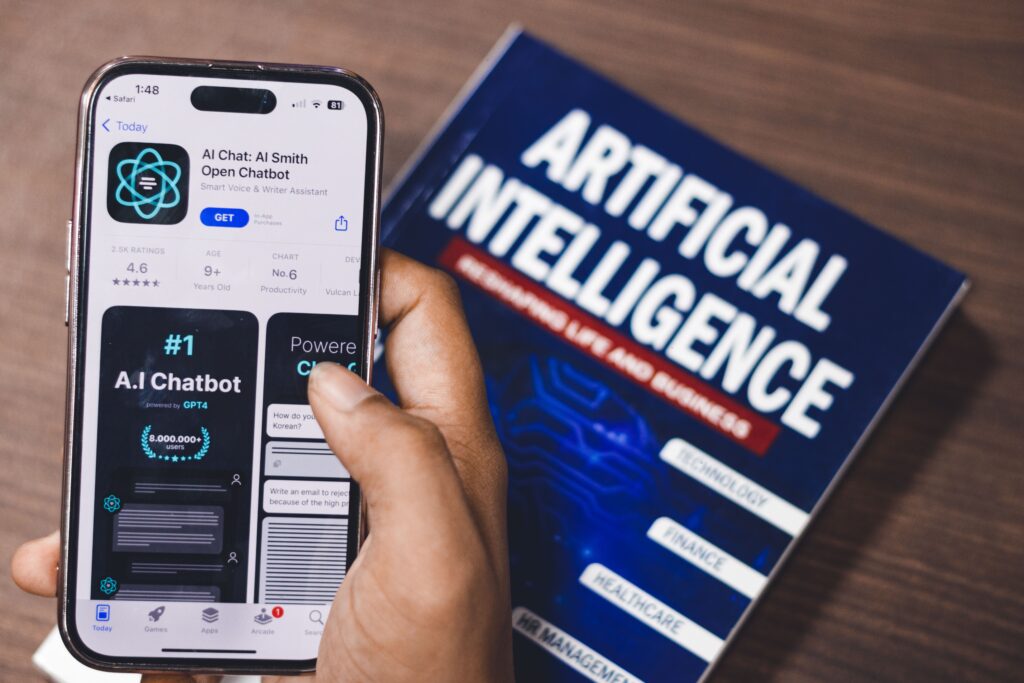

Marketing has always involved understanding customers, creating useful messages, choosing the right channels, and measuring results. Artificial intelligence is now changing how businesses approach many of these activities.
AI marketing refers to the use of artificial intelligence technologies to support marketing tasks such as content creation, customer analysis, personalization, campaign planning, advertising, and performance measurement.
For businesses, AI can reduce time spent on repetitive work and help teams analyze large amounts of information more efficiently. However, it is not a replacement for good strategy, human judgment, creativity, or a genuine understanding of customers.
The most effective approach is to treat AI as a supporting technology rather than a shortcut to marketing success.
What Is AI Marketing?
AI marketing is the use of artificial intelligence to assist with planning, creating, delivering, and analyzing marketing activities.
Depending on the technology being used, AI can help marketers with tasks such as:
- Generating content ideas
- Drafting marketing copy
- Analyzing customer behavior
- Segmenting audiences
- Personalizing communications
- Predicting potential customer actions
- Analyzing campaign performance
- Automating repetitive marketing tasks
- Identifying patterns in marketing data
- Supporting customer service through AI-powered systems
For example, a small online business might use an AI tool to generate several ideas for a product newsletter. A marketer can then review the suggestions, adapt them to the company’s brand voice, verify the information, and create the final email.
The important point is that AI supports the process. The marketer remains responsible for the strategy and final decision.
How Does AI Marketing Work?
AI marketing typically combines data, algorithms, automation, and human input.
A simplified process looks like this:
Data → Analysis → Insights → Marketing Action → Measurement → Improvement
For example, an ecommerce business may analyze information about products customers view, pages they visit, and previous purchases. An AI system can help identify patterns in that information.
The marketing team can then use those insights to develop more relevant campaigns.
The quality of the result depends heavily on the quality of the information available, the technology being used, and how carefully people interpret the output.
Common Applications of AI in Marketing
AI can be used throughout the marketing process. Some applications are more useful for certain businesses than others.
1. Content Planning and Creation
Generative AI can help marketers brainstorm:
- Blog topics
- Social media ideas
- Email subject lines
- Product descriptions
- Advertising concepts
- Video scripts
- Content outlines
It can be particularly useful during the early stages of content development.
However, automatically generated content should not simply be published without review. Marketing content still needs accurate information, a clear purpose, original value, and a tone appropriate for its audience.
2. Customer Segmentation
Not every customer has the same needs.
AI systems can help marketers analyze customer data and identify groups based on factors such as purchasing behavior, interests, engagement, or interactions with a website.
For example, an online store might identify separate groups of customers who:
- Frequently purchase a particular product category
- Have recently created an account
- Have not purchased for several months
- Regularly engage with email campaigns
These insights can help businesses create more relevant campaigns instead of sending exactly the same message to everyone.
3. Personalization
AI can support personalized marketing experiences by helping businesses determine which content, products, or messages may be relevant to different users.
For example, an ecommerce website could use customer activity to recommend products related to previous browsing or purchasing behavior.
Personalization should still respect customer expectations and applicable privacy requirements. More personalization is not automatically better if it feels intrusive or relies on data that customers did not expect to be used.
4. Marketing Automation
Marketing automation has existed for years, but AI can make some automated processes more sophisticated.
Businesses can use technology to assist with tasks such as:
- Email workflows
- Lead categorization
- Customer follow-ups
- Campaign scheduling
- Audience segmentation
- Reporting
Automation is particularly useful for repetitive tasks that follow clear rules.
However, important customer interactions may still require human involvement.
5. Advertising Optimization
AI can assist advertising teams by analyzing campaign data and helping identify patterns in audience behavior.
Depending on the advertising platform, automated systems may help with areas such as audience targeting, bidding, creative variations, and campaign optimization.
Marketers should still monitor campaigns rather than assuming an automated system will always make the right decision.
6. Customer Service
AI-powered chatbots and virtual assistants can handle certain common customer questions.
For example, a business could use an AI assistant to answer questions about:
- Opening hours
- Shipping policies
- Product availability
- Basic account information
- Frequently asked questions
More complicated or sensitive issues can be transferred to a human representative.
This combination can provide automation while preserving human support when it is actually needed.
Benefits of AI Marketing
AI can provide several practical benefits when implemented carefully.
Increased Efficiency
AI can help reduce the time required for repetitive tasks. Instead of starting every marketing activity from scratch, teams can use AI to generate initial ideas, organize information, or summarize large datasets.
Faster Analysis
Marketing teams often work with information from websites, advertising platforms, email campaigns, social media, and customer systems.
AI can help identify patterns in large datasets more quickly than manual analysis alone.
Better Personalization
Businesses can use AI-supported analysis to understand different customer groups and develop more relevant marketing experiences.
More Ideas
Creative teams can use AI as a brainstorming partner. It can generate alternative headlines, campaign concepts, content angles, and questions that marketers can evaluate.
Scalable Marketing Operations
A small marketing team may struggle to manage numerous repetitive activities manually. Appropriate automation can allow the team to handle more processes without necessarily increasing manual workload at the same rate.
Limitations and Risks of AI Marketing
AI is useful, but it has important limitations.
AI Can Produce Incorrect Information
Generative AI systems can sometimes produce inaccurate or misleading information.
For this reason, marketers should verify important facts before publishing content, particularly information involving prices, regulations, products, statistics, or other details that can change.
AI-Generated Content Can Feel Generic
If businesses rely too heavily on automated writing, their content may lack personality and original insight.
Readers usually benefit more from content that reflects real expertise, practical experience, original analysis, and a clear understanding of their needs.
Privacy Considerations
Marketing often involves customer information. Businesses should understand how their tools collect, store, process, and use data.
Before connecting customer information to an AI service, marketers should review the provider’s privacy documentation, security practices, and applicable legal requirements.
Costs Can Add Up
AI marketing tools range from free services to expensive enterprise platforms.
The real cost may include subscriptions, integrations, implementation, training, data management, and human oversight.
A business should evaluate whether a tool solves a meaningful problem before paying for it.
Human Judgment Remains Important
AI can identify patterns and generate suggestions, but it does not automatically understand every business objective, cultural context, customer relationship, or brand consideration.
Human review remains important for strategic and customer-facing decisions.
How to Build an Effective AI Marketing Strategy
Simply purchasing AI tools does not create an effective marketing strategy.
A better approach is to start with business objectives.
Step 1: Identify a Specific Problem
Ask what you are actually trying to improve.
For example:
- Content production takes too much time.
- Marketing reports require too much manual work.
- Customer inquiries are repetitive.
- Audience segmentation is difficult.
- Campaign data is difficult to analyze.
Starting with a problem makes it easier to determine whether AI is appropriate.
Step 2: Choose the Right Use Case
Not every marketing task requires artificial intelligence.
For simple tasks, traditional automation may be cheaper and easier.
AI becomes more useful when a task involves activities such as analyzing large amounts of information, generating variations, identifying patterns, or working with natural language.
Step 3: Select Tools Carefully
When evaluating an AI marketing tool, consider:
- Features
- Pricing
- Ease of use
- Integration options
- Data handling
- Security
- Output quality
- Customer support
- Scalability
Avoid choosing software simply because it is popular or advertised as an “AI-powered” solution.
Step 4: Establish Human Review
Create a process for checking AI-generated content and recommendations.
For example:
AI generates → Marketer reviews → Facts are verified → Content is edited → Final version is published
This can reduce the risk of publishing inaccurate or unsuitable material.
Step 5: Measure Results
Use meaningful metrics to determine whether the technology is helping.
Depending on the campaign, these could include:
- Conversion rate
- Cost per acquisition
- Engagement
- Email click-through rate
- Website traffic
- Customer retention
- Lead quality
- Time saved on repetitive tasks
The appropriate metric depends on the actual marketing objective.
AI Marketing vs. Traditional Marketing
AI marketing and traditional marketing should not necessarily be viewed as competing approaches.
| Area | Traditional Approach | AI-Supported Approach |
|---|---|---|
| Content ideas | Manual brainstorming | AI-assisted brainstorming |
| Data analysis | Manual reports and analysis | Automated or AI-assisted analysis |
| Customer segmentation | Rule-based/manual | AI-assisted pattern identification |
| Content production | Primarily manual | Human + AI-assisted |
| Customer support | Human agents | AI + human support |
| Personalization | Manual rules | AI-assisted recommendations |
| Decision-making | Human judgment | AI insights + human judgment |
In practice, many businesses can combine both approaches.
The strongest model is often human strategy supported by appropriate technology.
How Small Businesses Can Use AI Marketing
Small businesses do not need a large technology budget to start experimenting with AI.
A practical starting point could include:
- Use AI to brainstorm content topics.
- Create a monthly content calendar.
- Use AI to organize customer feedback.
- Draft email variations and review them manually.
- Analyze campaign reports more efficiently.
- Automate repetitive customer questions where appropriate.
- Track whether the tools actually save time or improve results.
For example, a small consulting company could use AI to turn common customer questions into potential blog topics. A human marketer could then research each topic and create useful, original articles.
The goal is not to produce the largest possible amount of content. The goal is to produce better marketing with less unnecessary manual work.
Best Practices for Responsible AI Marketing
Businesses can make better use of AI by following several principles.
Keep People Involved
Use AI to support employees rather than removing human oversight from important decisions.
Verify Important Information
Do not assume that AI-generated information is automatically accurate.
Protect Customer Data
Understand what information your AI tools receive and how providers handle it.
Maintain Your Brand Voice
AI-generated drafts should be adapted to match the company’s actual communication style.
Prioritize Customer Value
Do not use AI simply to create more advertisements, emails, or articles. Every marketing activity should serve a clear customer or business purpose.
Test Before Scaling
Start with a small use case, measure the outcome, learn from the results, and expand gradually.
What Does the Future of AI Marketing Look Like?
AI is likely to become increasingly integrated into marketing software and everyday workflows.
Rather than treating AI as a separate marketing department, businesses may increasingly use AI features within tools for analytics, customer relationship management, advertising, email, content production, and customer service.
This does not mean human marketers will become irrelevant.
Marketing still depends on understanding people, developing strong positioning, making strategic decisions, building trust, and communicating ideas effectively.
The role of marketers may increasingly shift toward strategy, judgment, creativity, customer understanding, and oversight, while AI handles more repetitive analytical and production tasks.
Frequently Asked Questions About AI Marketing
1. What is AI marketing?
AI marketing is the use of artificial intelligence technologies to support marketing activities such as content creation, customer analysis, personalization, automation, advertising, and campaign measurement.
2. Is AI marketing useful for small businesses?
Yes. Small businesses can use AI for practical tasks such as brainstorming, content planning, reporting, customer support, and repetitive marketing workflows. The best starting point is usually a specific problem rather than adopting many tools at once.
3. Can AI replace marketing professionals?
AI can automate or assist with certain marketing tasks, but marketing professionals still provide strategy, creativity, context, judgment, and oversight. In many cases, AI is more useful as a productivity tool than as a complete replacement for people.
4. Are AI-generated marketing materials always accurate?
No. AI systems can produce incorrect or outdated information. Businesses should review and fact-check important claims before publishing them.
5. What is the biggest mistake businesses make with AI marketing?
One common mistake is focusing on the technology instead of the marketing objective. A business should first identify what it wants to improve and then determine whether AI is the appropriate solution.
Conclusion
AI marketing can help businesses work more efficiently, understand customer information, personalize experiences, automate repetitive activities, and support content and campaign development.
But successful marketing still requires more than technology. Businesses need clear objectives, useful products or services, accurate information, responsible data practices, and a genuine understanding of their customers.
The best way to approach AI is not to automate everything. Instead, identify tasks where AI can provide meaningful assistance, maintain human oversight, measure the results, and continuously improve the process.
Used this way, AI becomes a practical addition to a modern marketing strategy rather than a replacement for the fundamentals that make marketing effective.