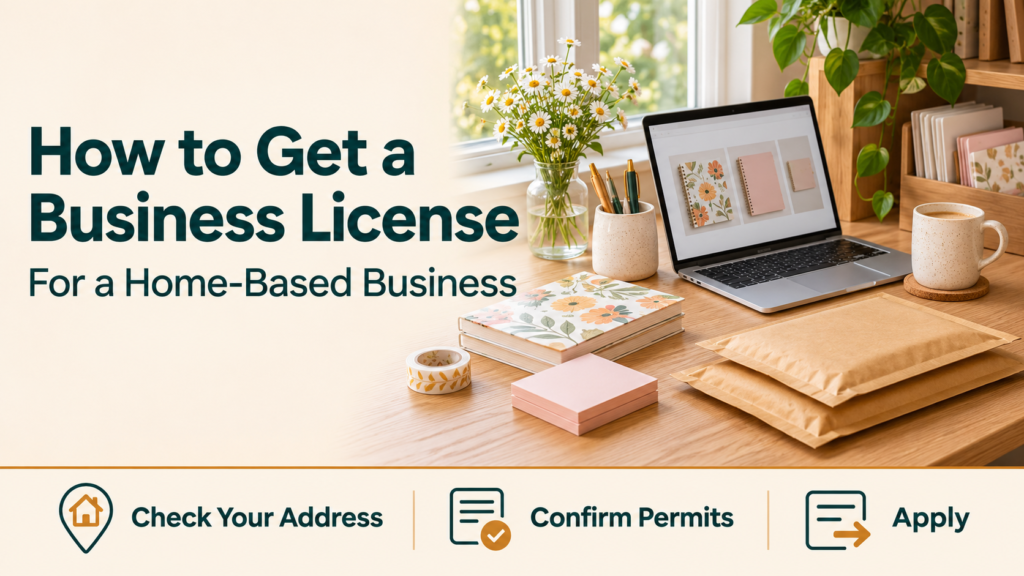

If you’re learning how to get a business license for a home-based business in the United States, start with your street address and a clear description of what you’ll do there. A freelance designer who works online and a baker who prepares food for customer pickup can face different rules, even on the same street. Your activity and location determine which agencies to contact. U.S. Small Business Administration startup guidance
Begin with the city or county that serves your home. Ask its licensing office whether you need a general business license or registration. Then ask planning or zoning whether your activities are allowed at the address and whether a home occupation permit is required. Check state or industry requirements once you know which local steps apply.
Which approvals might a home-based business need?
| Approval or registration | What it covers | Where to check |
|---|---|---|
| General business license or local registration | Whether the local government requires your business to register or obtain a certificate to operate | City or county business licensing office |
| Home occupation approval | Whether the proposed business activity can take place at the residence and under what conditions | Local planning or zoning office |
| Industry license or permit | An activity regulated separately, such as food production, childcare, or certain professional services | Relevant health agency, state licensing board, or other regulator |
| Sales tax registration or seller’s permit | State or local registration obligations related to taxable sales | State revenue or tax agency and any applicable local tax authority |
| Entity registration or trade name filing | Your legal structure or the name under which you operate | State business filing office or other office designated by your state |
A locality may combine approvals or use a name such as business license tax certificate. Your state may also issue separate registrations. Keep a list of the approvals the relevant agencies say apply to you, along with any application order they require. SBA startup guidance · Seattle business licensing guidance
How to apply for a home-based business license
1. Confirm which city or county serves your address
Use the official city boundary, county parcel, or zoning map to check whether your home is inside city limits. If it is outside city limits, start with the county and ask which authority handles land use and business registration. Use the actual address where the work takes place when asking about zoning.
If you rent or belong to a homeowners association, review the lease or association rules separately. Check for limits on business use, deliveries, signs, or visitors before making commitments to customers.
2. Describe the work you plan to do at home
Write a short description and use it when contacting licensing and zoning staff. Include whether customers will visit or pick up products, whether employees will work there, what supplies or inventory you’ll store, and whether you expect frequent deliveries or plan to put up a sign. Include any production work, such as baking or woodworking.
Ask the zoning office whether the activity is allowed at your address and whether you need an application, inspection, or written approval. Ask the licensing office which form to use and whether zoning approval must come first. Some cities publish a dedicated page for home-based businesses. Austin small business permitting guidance
3. Check state and industry requirements
Search your state’s official business portal and relevant licensing board for the activity you described. If you sell products, ask the tax agency whether you need a sales tax account or seller’s permit. If you sell through a marketplace, explain whether you also sell through your own website, at markets, or directly to customers. Those details help the agency determine which rules apply. SBA startup guidance · California sales and use tax registration example
If you plan to sell food made at home, check the permitted foods and sales methods before taking orders. In California, for example, the state maintains an approved cottage food list and directs applicants to their local environmental health department for registration or permitting. That process is specific to California. California cottage food guidance
4. Gather the documents and apply in the required order
Use the checklist on the official application page. Common items to have ready include your legal business name, any trade name, your operating address, a description of the activity, and identification or tax ID information if requested. Depending on the application, the agency may also ask for entity formation records, a floor plan, or evidence of a separate approval.
If your business needs an Employer Identification Number (EIN), the IRS issues it free. Record it separately from your local license and any permit numbers. If you’re forming an LLC or corporation or filing a trade name, check when those details must be available for the license application. IRS guidance on EINs · SBA startup guidance
Use the agency’s official portal or office. Check the current fee, how to pay it, and whether the agency requires an inspection or another department’s sign-off. Save your submission confirmation. Ask which approvals must be issued before you begin the activities listed in your application.
5. Keep the approvals and track renewal dates
Save the issued documents, any operating conditions, and the next renewal or reporting date. If your business changes its address, starts offering pickup, adds an employee at the home, or begins a new line of work, check whether you need to update an existing approval or apply for another one. Keep notes on how each agency told you to report changes.
Worked example: A home-based online stationery shop
Maya plans to sell stationery from a spare room and ship orders herself. She will keep two shelves of inventory at home, and customers will receive their orders by mail. Her search begins with the city’s rules for the exact address.
| What Maya checks | What she tells the agency |
|---|---|
| Local license | “I run the stationery shop from home and ship orders from this address.” |
| Home occupation rules | “I store inventory on two shelves and have no customer pickup or employees working here.” |
| Sales tax registration | “I plan to sell through my own website and an online marketplace. What registration applies to these sales?” |
| Future changes | “If I add weekend pickups, would I need new zoning approval or an updated license?” |
Maya records which offices she contacted, which forms they directed her to, and whether one approval must come before another. That gives her an application checklist for her proposed setup. If she later offers pickup, she already knows which question to revisit.
Frequently asked questions
1. Does an online business need a license if customers never visit?
It can. The business still operates from an address, and the absence of visitors is one detail the licensing and zoning offices can use to assess it. Check whether your city or county requires registration and whether the state requires anything for the activity or sales you plan. SBA startup guidance
2. Is a home occupation permit the same as a business license?
A home occupation approval addresses how a business uses residential property. A business license or registration serves the licensing purpose defined by the issuing agency. Ask whether your area issues both separately, combines them, or exempts your activity. Austin small business permitting guidance · Seattle business licenses
3. If I already have an LLC or EIN, do I still need a license?
You may. An LLC is a business structure and an EIN is a federal tax ID. Check with the licensing agency to see what it requires for your activity and location, regardless of which filings you’ve already completed. SBA startup guidance · IRS EIN guidance
4. How much does a home business license cost?
Fees vary with the jurisdiction and approval type. Check the agency’s current schedule for the initial filing, any separate zoning or inspection fee, and renewals. If several approvals apply, price them together before you submit. SBA startup guidance
5. Can I use a P.O. box or virtual address?
Ask the issuing office what it accepts for the operating address and the mailing address. Give the planning office the physical location where you’ll work or store goods so it can check the correct property. If you want a separate mailing address, confirm that the licensing form allows it and ask which address will appear in public records.
Conclusion
Start with your operating address and a clear description of the business. Confirm local licensing and zoning requirements, then check any state or industry rules that apply. Once you know which approvals you need and in what order, gather the documents and submit through the issuing agencies.